
Key takeaways
- St. Thomas: the busiest island — capital city, cruise port, most services and the most flights. Great if you like energy and convenience.
- St. Croix: the largest and most rural island, its own school district, generally more space for your money and a strong local community.
- St. John: small, spectacular and mostly national park — magical for nature lovers but with limited, expensive housing.
- The best choice depends on your subject, lifestyle, budget and tolerance for small-community living.
People who have never visited often imagine the U.S. Virgin Islands as one place. Spend a week there and you realize that St. Thomas, St. Croix and St. John are three distinct communities, each with its own personality, pace and practical realities. For an educator, the island you choose shapes your commute, your social life, your budget and even the kind of school you teach in.
This guide compares the three main islands side by side, from the point of view of someone who will live there all year — not a cruise passenger with eight hours to spare.
The big picture: two districts, three islands
Public schools are run by the Virgin Islands Department of Education in two districts:
- The St. Thomas–St. John district, which also covers tiny Water Island.
- The St. Croix district, which reorganized several schools into a K–8 model in 2019.
When you apply for jobs, you are effectively choosing a district. It is possible to live on St. John and work on St. Thomas (by ferry), but most teachers live on the island where they teach. Browse our schools directory to see what each district looks like.
| St. Thomas | St. Croix | St. John | |
|---|---|---|---|
| Size | ≈ 32 sq mi | ≈ 84 sq mi | ≈ 20 sq mi |
| Population (2020) | ≈ 42,000 | ≈ 41,000 | ≈ 3,900 |
| Main towns | Charlotte Amalie, Red Hook | Christiansted, Frederiksted | Cruz Bay, Coral Bay |
| Airport | Cyril E. King (STT) | Henry E. Rohlsen (STX) | None — ferry from St. Thomas |
| Pace | Busy, urban by island standards | Relaxed, rural, spread out | Village life, tourism-driven |
| Housing | Tight, mid–high cost | More supply, often lower cost | Very limited, highest cost |
| School district | St. Thomas–St. John | St. Croix | St. Thomas–St. John |
Population figures from the 2020 U.S. Census for the USVI, rounded.
St. Thomas: energy, convenience and connections
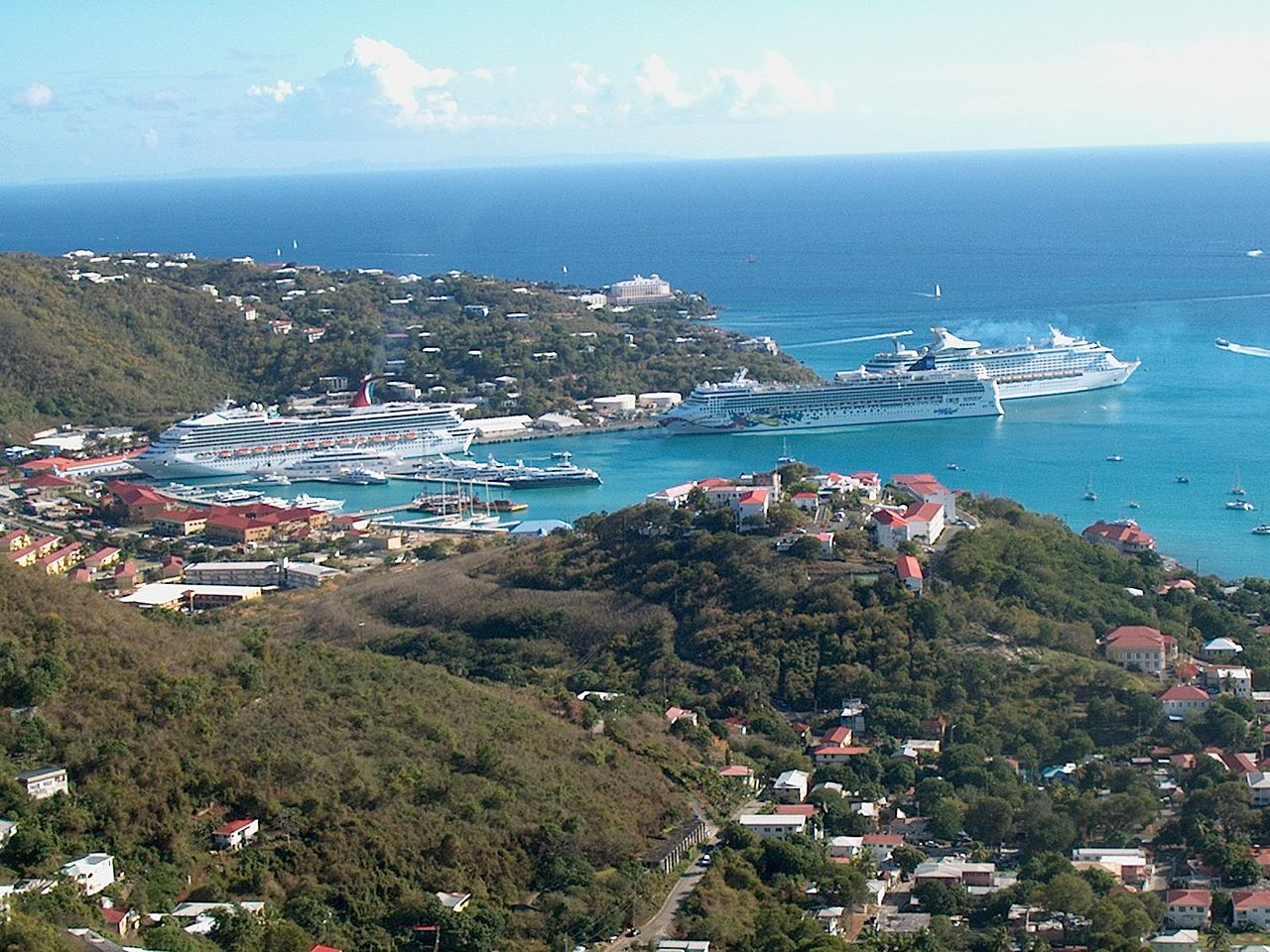
St. Thomas is the territory's commercial and governmental hub. Charlotte Amalie, the capital, wraps around one of the Caribbean's most beautiful harbors, with Danish-era warehouses, hillside step-streets and some of the busiest cruise docks in the region. The island has the most shops, restaurants, medical services and nightlife, and the most direct flights to the U.S. mainland.
Why teachers love it
- Convenience. Supermarkets, hardware stores, gyms and specialist services are within reach.
- Flights home. More route options and competition generally mean more flexibility for holidays.
- Professional community. The University of the Virgin Islands' St. Thomas campus and a larger pool of colleagues make networking and graduate study easier.
- Iconic beaches. Magens Bay, Lindquist, Sapphire and Brewers Bay are easy weekend escapes.
What to consider
- Traffic. Narrow roads and cruise-day crowds can turn a short commute into a long one. Live close to your school if you can.
- Steep terrain. Many homes are on hillsides with dramatic views — and dramatic driveways.
- Cost. Demand from tourism and government employment keeps rents firm.
St. Croix: space, history and community

About forty miles south of St. Thomas, St. Croix is the largest island and feels like a different world: rolling hills, pastureland, a rainforest on the West End and two beautifully preserved Danish colonial towns. Christiansted's yellow Fort Christiansvaern and waterfront boardwalk are part of a National Historic Site; Frederiksted, on the west coast, has a long pier famous for sunset swims and snorkeling.
Why teachers love it
- More space for the money. A larger housing stock often means more affordable rents and a better chance of a yard or a garden.
- A strong local culture. Crucian identity is proud and distinct, from quelbe music to the Crucian Christmas Festival and the annual agriculture fair.
- Nature on your doorstep. Buck Island Reef National Monument, Salt River Bay and Point Udall — often cited as the easternmost point of the United States.
- A district of its own. High schools, K–8 schools, a junior high and career & technical education programs.
What to consider
- Distances. The island is spread out; a car is essential.
- Fewer flights. Direct mainland routes are more limited than from St. Thomas.
- Quieter nightlife. Social life revolves around community events, beaches and friends' porches.
St. John: the national park island

St. John is the smallest of the three main islands, and roughly two-thirds of it is protected as Virgin Islands National Park. Trails wind through forest to sugar-mill ruins and petroglyphs; beaches like Trunk Bay, Cinnamon Bay and Maho Bay regularly appear on “world's best” lists. Life centers on Cruz Bay, where the ferries arrive, and on the quieter, more bohemian Coral Bay on the east end.
Why teachers love it
- Unmatched natural beauty. Your after-school routine could be a snorkel with turtles.
- Tight-knit community. In a small population, you will know your students' families — and they will know you.
- Small schools. Class sizes and school communities tend to be intimate.
What to consider
- Housing is scarce and expensive. Long-term rentals compete with vacation rentals. Start searching early and network hard.
- Everything comes by ferry. Groceries cost more and big shopping trips mean a boat ride to St. Thomas.
- Limited positions. With a small student population, openings are fewer. Many St. John residents commute to jobs on St. Thomas.
How to choose: five questions to ask yourself
- Where are the openings in my subject? Check official VIDE vacancies for both districts before you fall in love with an island.
- What can I afford? Run your numbers in our cost calculator for each island.
- How much do I value convenience vs. space? St. Thomas for convenience, St. Croix for space, St. John for nature.
- How often will I fly home? If family visits matter, factor in flight options and prices.
- How do I feel about small communities? On any island — and especially on St. John — your personal and professional lives will overlap.
Try before you commit
If you can, visit before you accept an offer. Spend a weekday driving the route to the school at rush hour, visit a supermarket, look at a few rentals and eat where locals eat. Many successful island teachers say their first visit told them more than months of online research.
Want a personal comparison based on your subject, budget and lifestyle? Book a free discovery call through our contact page, or explore our Island Living guide with live weather and local time for each island.
Sources: U.S. Census Bureau 2020 Island Areas data; National Park Service; Virgin Islands Department of Education. Last reviewed September 2026.
Frequently asked questions
St. Thomas and St. Croix have the most schools and therefore most openings. St. John has a small student population, so positions there are limited. Always check current official vacancies for both districts.
Yes, many residents commute by ferry between Cruz Bay and Red Hook. Factor ferry schedules, costs and weather into your daily routine.
St. Croix generally offers more housing for the money because of its larger size and housing stock. St. John is typically the most expensive.
By short flights between the two airports or by ferry service when operating. Check current schedules and operators.


